
Toner vs Essence vs Serum vs Ampoule: What Each Does and the Order to Layer Them

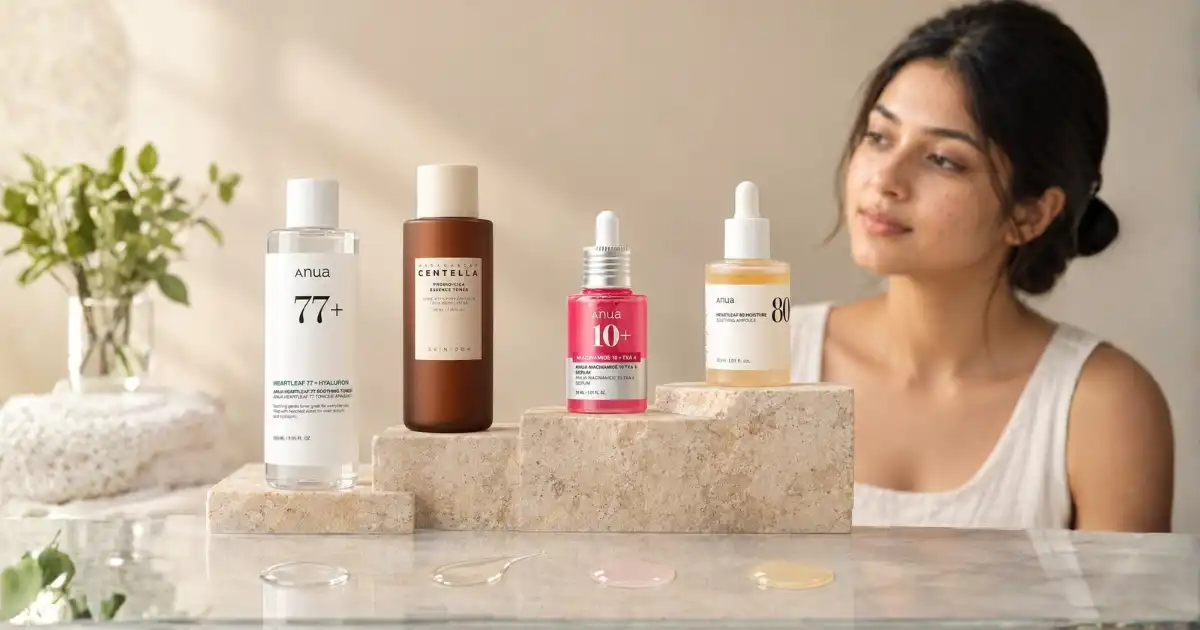
Toner preps and balances the skin, essence provides lightweight hydration, serum targets specific skin concerns, and ampoule delivers an extra-concentrated booster.
To layer them correctly, apply from thinnest to thickest: toner, then essence, then serum. An ampoule takes the place of your serum for a short period, not an extra layer on top. Seal everything with moisturizer, and add sunscreen in the morning.
Navigating the world of layered skincare can quickly feel overwhelming with so many bottles lining your vanity. If you have ever stared at your routine, wondering about toner vs. essence vs. serum vs. ampoule, you are not alone.
Many people find it tricky to distinguish between these liquid layers and determine which ones their skin actually needs. Whether you are building a multi-step routine from scratch or looking to buy from an authentic skin care products seller, understanding how each product functions ensures every layer works in harmony to give you a healthy, glowing complexion.
Toner vs Essence vs Serum vs Ampoule at a Glance
Toner preps, essence hydrates lightly, serum targets one concern, and an ampoule delivers a stronger, short-term boost.
The table shows how each step feels, what it does, and when to skip it.
| Step | Texture | Main job | Typical actives | When to use | Skip if |
| Toner | Watery | Preps skin; hydrates, soothes, or lightly exfoliates | Hyaluronic acid, rose water, AHA, BHA | Right after cleansing | Your skin feels fine without it |
| Essence | Light and watery | Adds a thin layer of hydration | Fermented extracts, snail mucin, hyaluronic acid | After toner | Your toner and serum already hydrate enough |
| Serum | Light gel or liquid | Targets one concern | Vitamin C, niacinamide, retinol, peptides | After essence, before moisturizer | You have no clear skin goal yet |
| Ampoule | Light liquid, often in a small bottle | Short-term concentrated boost | Centella, vitamin C, peptides | In the serum step, for a set period | Your skin is irritated, or you already use a strong serum |
The Thin-to-Thick Rule: Lightest Product Goes First
Apply the thinnest product first and the thickest last.
This is a convention from Korean skincare, not a law of science, but it works well in practice. Each thin layer settles into your skin before a heavier one covers it.
Quick Tip: Not sure which bottle is thinner? Put one drop of each on your fingers and compare. The runnier one goes first.
What Is Toner and Do You Need It?
A modern toner is a leave-on liquid you apply after cleansing and before moisturizer. It is not the harsh, stinging astringent your mother may remember.
Today’s formulas come in three main types: hydrating, soothing, and exfoliating.
Dermatologist Marisa Garshick explains that a toner can add antioxidant, hydrating, anti-inflammatory, or exfoliating benefits, depending on its ingredients.
Cleveland Clinic also notes that newer toners are less drying and use water-based, skin-friendly ingredients. So the honest answer is that toner is optional, but a good one does real work.
Heads Up: Many “hydrating” toners also contain exfoliating acids. Check the ingredient list for AHA or BHA before you stack them with other acids.
Hydrating vs Exfoliating Toner for Oily Skin
Oily skin does not need to skip hydration. A hydrating toner with hyaluronic acid or rose water adds water without adding grease.
An exfoliating toner with BHA or AHA helps with clogged pores and rough texture.
Exfoliating toners can strip skin when used incorrectly. Patch test first, and go slowly. Start with a few nights a week and watch how your skin responds in Dhaka’s humidity.
Who Can Skip It
You can skip toner if your cleanser leaves skin comfortable and your routine already works.
If you have active eczema or rosacea, ask a doctor before adding a toner at all.
What Is Essence and How Is It Different From Toner?
Essence is a lightweight, watery layer that adds hydration and sits between toner and serum.It is a staple of Korean skincare routines, and many essences use fermented ingredients such as galactomyces or rice ferment.
If you searched for the meaning of essence in Bengali, the dictionary word is নির্যাস (extract). In skincare, an essence is a lightweight, hydrating liquid applied after toner.
The overlap with toner is real, and we will say so plainly.
Some products blur the line completely. Our Dabo All-in-One Black Snail Repair Essence Toner is sold as both.
Toner preps and balances, while essence hydrates and treats, and many people use both.
Essence vs Toner: Can One Replace the Other?
Often, yes. If your toner is hydrating and your essence is hydrating, you are doing the same job twice.
Pick the one you enjoy using and drop the other.
Keep both if they do different jobs. An exfoliating toner paired with a hydrating essence is a good example. The toner removes dead skin, and the essence replenishes moisture.
Pro Tip: Dry skin often likes both steps in the cooler months. In humid weather, one is usually enough.
What Is Serum and What Does It Target?
A serum is a light, concentrated product built to treat one specific concern. It carries more active ingredients than toner or essence, so a few drops go a long way.
You apply it after essence and before moisturizer.
Common serum actives include vitamin C for dullness, niacinamide for oiliness and uneven skin tone, retinol for fine lines, hyaluronic acid for hydration, and peptides for firmness.
Our serum collection is organized by these actives, so you can shop by concern.
How to Pick One Serum for One Concern
Start with your biggest worry and choose the actives that match it.
Oily or uneven skin does well with niacinamide. Dull skin does well with vitamin C, and dry or tight skin does well with hyaluronic acid or ceramides.
Resist the urge to buy three serums at once. One serum used steadily beats a shelf of products used randomly. Add a second only after your skin has handled the first for a few weeks.
What Is an Ampoule and Is It Stronger Than a Serum?
An ampoule is a concentrated treatment that works like a serum with a bigger dose of actives.
Is it stronger than a serum?
Often yes, but not always. Brands label these products differently, so always read the ingredient list instead of trusting the name.
If you searched for ampoule meaning in Bengali, the word is written as অ্যাম্পুল. It takes its name from the small sealed glass vial that these products first came in. Glass protects concentrated ingredients from light and air, which is why many ampoules still use small bottles.
Here is how ampoule vs serum works in practice. Most people use a serum every day for the long term. They reach for an ampoule as a short-term booster when skin needs extra help, such as after a stressful season or a change in weather.
How Long Can You Use an Ampoule?
There is no single rule that fits every product. Follow the directions on the bottle and begin with a gentle formula, such as centella or hyaluronic acid, before trying stronger ones like vitamin C or retinol.
Many people use an ampoule for a set stretch, then go back to a plain serum.
Important: If your skin stings, turns red, or peels, stop and let it recover. A booster should never leave your skin worse than it was when you started.
The Correct Order: Morning and Night
Cleanse first, then apply from thinnest to thickest, and finish with sunscreen in the morning.
At night, skip the toner and essence if you like, and focus on one treatment before moisturizer. These two lists cover almost everyone.
Morning
- Cleanser
- Toner
- Essence
- Serum
- Moisturizer
- Sunscreen (SPF)
Night
- Cleanse
- Treat (serum, ampoule, or an active such as retinol)
- Moisturize
Sunscreen is the step you should never skip in Bangladesh, which is why our sunscreen range features lightweight options crafted specifically for hot and humid weather.
Where Do Actives Like Retinol and Acids Go?
Put retinol and exfoliating acids in your night “treat” step .Gulf News quotes Eman AboElnagah of Medcare, Dubai, advising retinol at night on clean, dry skin. Vitamin C fits better in the morning, which keeps the two actives apart.
Tempo reports dermatologist Andrea Suarez saying retinol and vitamin C work at different pH levels and are better used at different times.
That is an easy rule to follow. Vitamin C in the morning, retinol at night.
How Long to Wait Between Layers?
When layering skincare products, you do not need to wait very long between steps.
There is no single proven wait time. Wait until the previous layer no longer feels wet or sticky, and follow the label if a product gives a wait time.
For basic hydrating layers, simply wait until the product no longer feels wet or sticky to the touch before moving on to the next step in your routine.
Do You Need All of Them? A Minimum Routine for Dhaka’s Humidity
No, you do not need all four. Build your routine around your skin type and your time, not around the number of steps.
Heavy layering in sweat and heat can feel sticky and occlusive, so lighter is usually better here.
The 3-step routine (oily or combination skin, short on time)
- Gentle cleanser
- One serum, such as niacinamide
- Sunscreen
The 5-step routine (dry or combination skin, more time)
- Cleanser
- Toner or essence (not both on hot days)
- Serum
- Moisturizer
- Sunscreen
Quick Tip: Add an ampoule only when your skin needs a boost, and let it replace your serum for that period instead of stacking on top of it.
Layering Mistakes: What Not to Combine
Most layering problems come from doing too much of the same thing. Skin gets irritated when you double up on actives.
These are the four mistakes we see most often.
- Doubling up on hydration: A hydrating toner, an essence, and a serum all serve the same purpose. Keep the one you like best.
- Using two exfoliants: An AHA toner plus a BHA essence is a quick road to red, sore skin.
- Mixing vitamin C with strong acids: Vitamin C is itself an acid, so layering it with AHA or BHA can irritate. Use vitamin C in the morning and acids at night.
- Putting retinol and acids together: Gulf News quotes Fazeela Abbasi of Euromed, Dubai, advising to keep retinol separate from vitamin C and from AHA and BHA. Into The Gloss also lists acids plus retinol as a pairing to avoid.
Warning: If you are new to actives, add one new product at a time. That way, you know exactly what caused a reaction.
Examples From Our Range
Here is one product from each category to show what the ingredient focus looks like in a real bottle. Each one is a genuine, sealed product sold at Fashion Skin Care BD.
- Toner: Anua Heartleaf 77% Soothing Toner is formulated around heartleaf extract to calm.
- Essence: COSRX Advanced Snail 96 Mucin Power Essence contains 96% snail secretion filtrate for hydration and repair.
- Serum: Anua Niacinamide 10% + TXA 4% Dark Spot Correcting Serum targets dark spots and uneven tone.
- Ampoule: Skin1004 Madagascar Centella Ampoule uses centella to calm and support the skin barrier when it’s tired.
Want a gentle starting point?
Our essence collection has hydrating picks from Beauty of Joseon, Isntree, and Haruharu Wonder. Message us on social media if you want help building a routine, and we will guide you to the right bottles.
Final Word
Toner preps, essence hydrates, serum treats, and an ampoule boost.
By following the simple rule of layering from thinnest to thickest, reserving strong actives for nighttime, and avoiding product overlap, you can build a streamlined routine that truly works for your skin, especially in Dhaka’s heat.
Skincare isn’t about how many steps you have; it’s about choosing the right products, using them consistently, and giving your skin what it actually needs.
Ready to simplify your routine? Explore our curated selection of authentic toners, essences, serums, and ampoules at Fashion Skin Care BD to find your perfect match today!
Frequently Asked Questions
What is the difference between toner, essence, serum, and ampoule?
Toner preps skin and adds light hydration or gentle exfoliation. Essence adds a thin layer of hydration. Serum targets one concern with concentrated actives, and an ampoule is a stronger, short-term version of a serum.
In what order do I apply them?
Apply from thinnest to thickest: cleanser, toner, essence, serum or ampoule, moisturizer, then sunscreen in the morning. At night, finish with moisturizer instead of sunscreen.
Do I need all of them? Can I skip toner or essence?
No, you do not need all four. You can skip toner or essence if your skin feels comfortable and your serum and moisturizer cover your needs.
Is an ampoule stronger than a serum?
Often yes, because ampoules usually carry a higher concentration of actives. It is not guaranteed, so read the ingredient list instead of relying on the label.
Can I use an ampoule every day?
Gentle formulas, such as those containing centella or hyaluronic acid, are usually fine for daily use. Stronger actives, such as vitamin C or retinol, are best introduced slowly, and you should always follow the product directions.
