
The Definitive Skin-Type Guide to Sunscreen: How to Choose Your Perfect Match

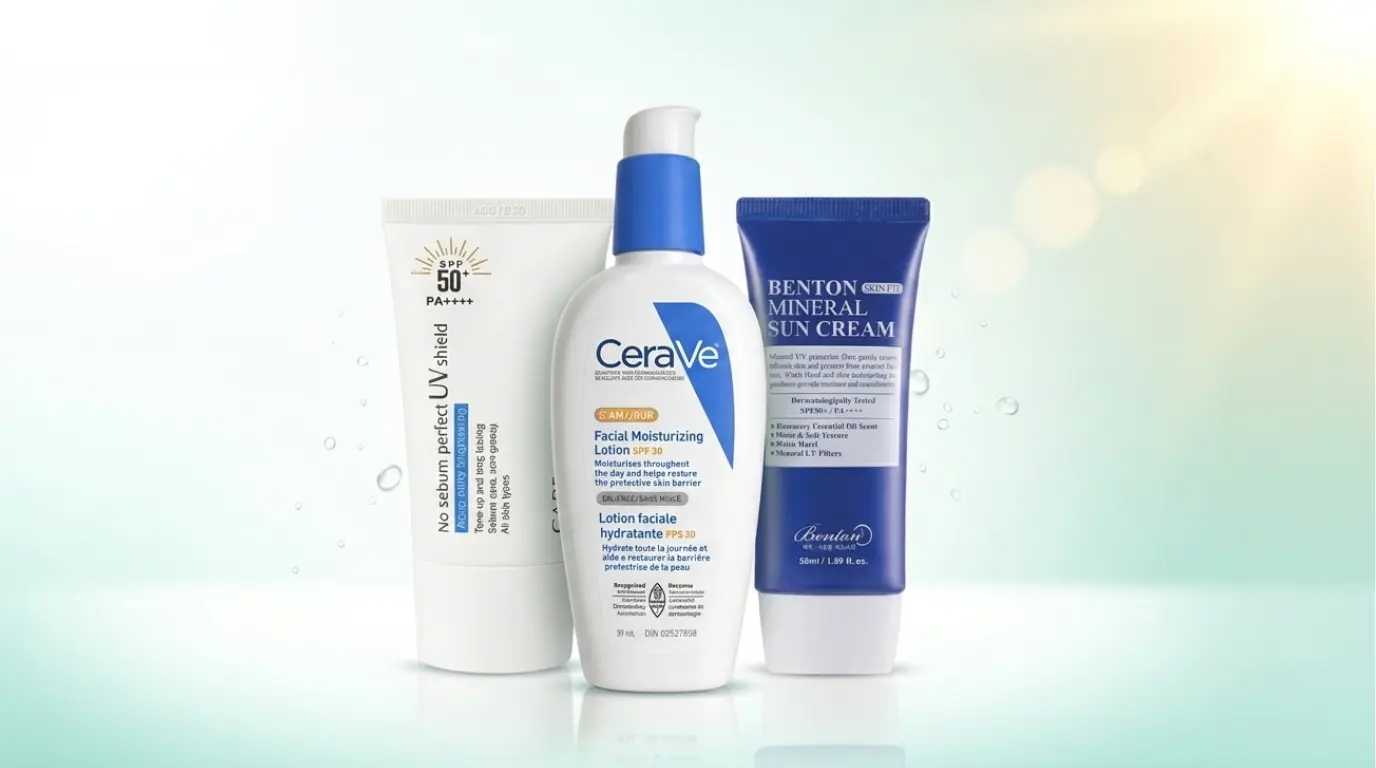
Selecting the right sunscreen for your face means matching its specific formula and active ingredients directly to your unique skin profile.
Choose a lightweight, gel-based fluid labeled “non-comedogenic” and “dry-touch” to control shine if you have oily skin, or a rich cream packed with Hyaluronic Acid and Ceramides to lock in moisture if your skin is dry. For sensitive skin types, stick exclusively to fragrance-free 100% Mineral sunscreens (Zinc Oxide) to prevent irritation, while those with deeper skin tones should opt for invisible chemical fluids or tinted mineral formulas containing Iron Oxides to avoid an ashy finish. No matter your skin profile, always verify that your bottle reads “Broad-Spectrum” with a minimum rating of SPF 30 to 50 and PA+++ to ensure full protection against both burning UVB rays and deeply aging UVA rays under the intense Bangladeshi sun.
At Fashion Skin Care BD, we believe daily sun care shouldn’t feel like a chore. This definitive guide will decode exactly how to choose the right sunscreen that matches your unique skin profile, keeps you protected under the intense tropical sun, and feels weightless all day.
Quick Summary: The Ultimate Sunscreen Cheat Sheet
If you are in a rush to find your perfect UV shield, here is a quick breakdown of what your skin type needs:
- Oily / Acne-Prone Skin: Gel or fluid formulas labeled “non-comedogenic” and “dry-touch,” powered by sebum-regulators like Niacinamide.
- Dry Skin: Cream-based formulas rich in Hyaluronic Acid and Ceramides; avoid denatured alcohols.
- Sensitive / Reactive Skin: 100% Mineral sunscreens (Zinc Oxide) with zero added fragrances.
- Hyper-Pigmented / Deep Skin Tones: Invisible chemical fluids or tinted mineral sunscreens formulated with Iron Oxides to avoid an ashy cast.
Explore our 100% authentic sunscreen collection to find the exact formulas tailored to your unique skin type and enjoy reliable daily sun protection.
Why Your Skin Type Changes Everything
Finding the right sunscreen in Bangladesh can feel like an endless cycle of trial and error.
One formula leaves your face dripping with grease by midday in the intense Dhaka humidity, and another leaves an unblending white mask that looks completely unnatural.
The truth is, most people treat sun protection as a one-size-fits-all step, which can lead to breakouts, flakiness, or skipped applications.The 90% Rule: Why sun damage is the primary cause of premature aging
According to the Skin Cancer Foundation, photoaging – damage caused by ultraviolet (UV) light- is responsible for up to 90% of the visible changes commonly attributed to natural aging.
This includes deep wrinkles, fine lines, loss of skin elasticity, and hyperpigmentation (sunspots). When UV rays penetrate skin cells, they generate free radicals that break down collagen and elastin, the scaffolding that keeps your skin firm. Skipping sunscreen while investing in expensive anti-aging serums is like pouring water into a leaky bucket.
Beyond the Beach: Why you need protection while driving or sitting near windows
A common misconception is that sun protection is only necessary for outdoor activities or beach holidays. While standard window glass blocks most UVB rays, it allows UVA rays to pass through effortlessly.
If you sit next to a window at your office desk, commute via car, or spend time in public transport across Bangladesh, your skin is actively absorbing UVA rays.
This continuous, low-grade exposure accumulates over time, driving cellular damage without you ever feeling a sunburn. This makes a daily sun protection guide essential for everyone, regardless of their indoor lifestyle.
The Short-Term vs. Long-Term: Tanning and redness vs. DNA damage and cancer risk
The immediate consequences of sun exposure are surface-level: tanning, immediate pigment darkening, and painful redness.
However, the long-term, invisible damage occurs deep within the cellular DNA. UV radiation mutates cellular genetic material, which can eventually lead to skin cancers, including melanoma.
A customized sunscreen routine ensures you protect both the superficial aesthetic of your skin and its deep cellular health.
Decoding the Label: SPF, PA, and Broad-Spectrum
To master how to know which sunscreen suits your face, you must learn to read beyond the marketing claims on the front of the bottle.
SPF 30 vs. 50: Why higher numbers aren’t a “shield” but a timer
Sun Protection Factor (SPF) measures a product’s ability to protect the skin against UVB rays. A common trap is assuming SPF 50 sunscreen offers nearly double the protection of SPF 30 sunscreen. In reality:
- SPF 30 filters out approximately 97% of UVB radiation.
- SPF 50 filters out approximately 98% of UVB radiation.
Rather than acting as an impenetrable armor, think of SPF as a timer. If your unprotected skin normally burns in 10 minutes, an SPF 30 sunscreen theoretically protects it for 30 times longer (300 minutes). However, factors like sweat, friction, and sebum production degrade this barrier rapidly, which is why regular reapplication remains critical regardless of the number.
PA Ratings: Understanding the “+” system for UVA protection in tropical climates
Developed in Japan, the PA grading system measures a sunscreen’s protection against UVA rays using Persistent Pigment Darkening (PPD).
In tropical countries like Bangladesh, where the UV index frequently hits extreme levels, paying attention to the PA rating is crucial:
- PA+: Light UVA protection.
- PA++: Moderate UVA protection.
- PA+++: High UVA protection.
- PA++++: Extremely High UVA protection.
Always aim for a minimum rating of PA+++ to counteract the intense, year-round UVA exposure characteristic of South Asia.
The “Broad-Spectrum” Non-Negotiable: Protecting the skin surface (UVB) and deep layers (UVA)
To ensure full protection, look for the term Broad-Spectrum Sunscreen on the packaging. This certifies that the formula has passed rigorous testing to provide proportionate protection across both UV spectrums.
UVA vs. UVB Memory Trick:
- UVA = Aging: Penetrates deeply into the dermis, causing wrinkles, sagging, and long-term DNA mutations.
- UVB = Burning: Targets the superficial epidermis, causing sunburns, immediate tanning, and skin reddening.
Chemical vs. Mineral: Which One Wins?
| Feature | Chemical Sunscreen | Mineral (Physical) Sunscreen |
| Active Ingredients | Avobenzone, Octisalate, Oxybenzone, Homosalate, Tinosorb | Zinc Oxide, Titanium Dioxide |
| Mechanism | Absorbs UV rays and converts them into negligible heat | Sits on top of skin to deflect and scatter UV rays |
| Texture & Finish | Lightweight, clear, absorbs fully without white residue | Thicker, can lean matte or chalky unless micronized |
| Activation Time | Requires 15–20 minutes to settle into the skin | Functions immediately upon application |
| Sensitivity Risk | Higher potential for allergic reactions or eye irritation | Exceptionally low risk; highly soothing for raw skin |
Chemical Sunscreens: Lightweight, no white cast, but potential for “eye sting”
Chemical sunscreens act like a sponge. They use organic compounds to absorb UV radiation, convert it into heat, and release it from the body.
Because they are highly soluble, they enable elegant, water-like fluids that sit perfectly beneath cosmetics. The drawback? Certain older chemical filters can cause a distinct burning sensation if they migrate into the eyes during humid, sweaty weather.
Mineral (Physical) Sunscreens: Zinc/Titanium-based, instant protection, best for reactive skin
Mineral filters function like a protective shield on the skin’s surface. Because ingredients like Zinc Oxide do not penetrate the skin barrier, they rarely trigger allergic contact dermatitis. Zinc Oxide also possesses natural anti-inflammatory properties, making mineral options highly beneficial for acne-prone flare-ups or rosacea.
The Hybrid Evolution: Modern formulas that combine the best
The skincare industry has evolved to introduce hybrid formulations. By blending modern, non-irritating chemical filters (like Tinosorb S or Uvinul A Plus) with micronized Zinc Oxide, hybrid sunscreens achieve a completely sheer, cosmetically elegant finish while maintaining high-grade, photostable physical protection.
Deep Dive: The Best Sunscreen for Every Skin Profile
1. Oily & Acne-Prone Skin
Choosing a sunscreen for oily skin in Bangladesh’s sweltering climate requires formulas that actively manage excess oil production rather than exacerbate it.
- Look for “Non-Comedogenic” and “Dry-Touch” labels: These terms guarantee the product has been safety-tested to ensure it won’t clog pores or exacerbate acne vulgaris.
- Expert Tip: Silicone-based formulas (such as cyclopentasiloxane or dimethicone crosspolymers) provide a smooth, velvet matte, primer-like finish that controls midday shine and creates a blurred canvas.
- Why Niacinamide is your best friend: Sunscreens infused with Niacinamide (Vitamin B3) offer dual benefits. Niacinamide helps regulate sebum production, reduces the appearance of enlarged pores, and minimizes post-inflammatory hyperpigmentation (PIH) left by past breakouts.
2. Dry & Dehydrated Skin
Dry skin lacks essential lipids, meaning a poorly formulated sunscreen for dry skin will cling to dry patches, flake off, and compromise your moisture barrier.
- Rich Cream-Based and Fluid Formulas: Switch away from mattifying gels to rich milks or creams packed with Hyaluronic Acid (to bind moisture to the skin) and Ceramides (to repair the lipid barrier).
- The “Moisturizer + SPF” Hack: For normal-to-dry skin profiles, modern emollient sunscreens can completely replace your morning moisturizer step. This simplifies your routine, prevents heavy layering, and reduces the risk of product pilling.
- Ingredients to avoid: Steer clear of formulas containing high concentrations of denatured alcohol (often listed as Alcohol Denat.), which brands use to speed drying but can leave skin tight and irritated.
3. Sensitive & Reactive Skin
Sensitive skin types require clean, minimal ingredient lists that prioritize skin barrier protection over complex aesthetics.
- Why Mineral filters are safer: Conditions like Rosacea, Eczema, and localized dermatitis mean your skin barrier is compromised. 100% mineral formulas containing Zinc Oxide are inherently inert and soothing.
- The Eye Sting Test: If you struggle with watery, burning eyes, mineral formulas are superior because they do not break down or evaporate when exposed to sweat and body heat.
- The Patch-Test Protocol: Before introducing any new formula across your face, apply a coin-sized amount along your jawline or behind your ear for 48 hours to screen for latent contact allergies.
4. Rich, Deep, & Medium Skin Tones
Finding an invisible sunscreen for dark skin tones that does not leave an unblending grey or violet undertone can be incredibly frustrating.
- The rise of Tinted Mineral sunscreens: Standard mineral filters leave a prominent white cast on deeper skin complexions. Tinted mineral variants use custom blends of Iron Oxides to match your skin tone perfectly while providing additional defense against visible blue light (which can trigger melasma).
- Invisible Chemical Fluids: If you prefer a completely transparent finish, opt for organic chemical fluids or gel-essences. They apply completely clear, leaving a radiant, natural glow with zero ashy residue.
5. Children & Infants
Children’s skin is structurally thinner and absorbs topical ingredients more readily than adult skin.
- Stick to 100% Mineral Filters: Pediatricians uniformly recommend pure physical blocks for children. Despite the slight white cast, they remain the safest option because they lack chemical filters that could potentially cause contact reactions on delicate skin.
Advanced Application & Lifestyle Tips
The Two-Finger Rule
To achieve the exact level of UV protection stated on your bottle, you must apply approximately 2 milligrams of product per square centimeter of skin. For the face and neck, this translates to the ‘Two-Finger Rule’.
You should draw two steady strips of sunscreen directly along your index and middle fingers.
Reapplication Over Makeup
Sunscreen efficacy degrades after two hours of cumulative exposure. To reapply without disrupting your cosmetics, consider using a high-SPF mineral powder sunscreen dusted over your t-zone, or gently patting a lightweight fluid sunscreen across your face using a dry makeup sponge.
Active Lifestyles
If you are exercising, swimming, or commuting in the intense Bangladeshi humidity, always look for the label “Water-Resistant” or “Sweat-Resistant.” These formulas are engineered to remain stable for 40 to 80 minutes while exposed to moisture.
Secure Your Skin’s Future
The single most effective anti-aging product you will ever own is a well-formulated sunscreen that you enjoy wearing every single day.
By understanding your skin type and choosing a formula tailored to your needs, you can easily prevent premature signs of aging, sunspots, and serious cellular damage.
Ready to find your perfect daily match? Head over to the Fashion Skin Care BD Sunscreen Collection today and treat your skin to the premium protection it deserves!
Frequently Asked Questions
How do I choose the right sunscreen for my specific skin type?
Identify your primary skin concern first. For oily skin, choose oil-free, mattifying water-gels. For dry skin, pick cream formulas containing emollients and humectants. For sensitive or reactive skin, stick to pure mineral filters like Zinc Oxide.
Does sunscreen still work if I am sitting inside by a window?
Yes, you still need sunscreen indoors if you are near windows. While glass blocks UVB rays, standard window panes allow harmful UVA rays (the primary drivers of premature aging and hyperpigmentation) to pass right through into your room.
Why does my sunscreen burn or sting my eyes?
Eye stinging is typically caused by older chemical UV filters, such as Avobenzone or Octocrylene, migrating into the eyes as you sweat. Switching to a mineral sunscreen or a formula using modern encapsulated chemical filters can resolve this issue entirely.
Is SPF 50 significantly better than SPF 30 for daily use?
SPF 30 filters roughly 97% of UVB rays, while SPF 50 filters about 98%. While the mathematical difference is small, SPF 50 offers a valuable margin of safety for the intense UV index found in tropical climates like Bangladesh.
How can I reapply sunscreen without ruining my makeup?
You can press a lightweight sunscreen fluid over your makeup with a blending sponge, apply an SPF-infused translucent setting powder, or use a broad-spectrum sun stick that slides cleanly over your makeup.
What is the difference between mineral and chemical sunscreen for sensitive skin?
Mineral sunscreens sit on the skin’s surface and deflect UV rays, making them gentle and non-irritating. Chemical sunscreens absorb UV rays and convert them into heat, which can occasionally trigger redness or warmth in reactive skin.
Why does my sunscreen leave a white cast, and how can I avoid it?
The white cast is caused by physical mineral blocks like Titanium Dioxide and Zinc Oxide, which naturally reflect light. To avoid this, choose a modern hybrid sunscreen, a chemically clear fluid, or a tinted mineral option that blends into your natural skin tone.
Is it safe to use chemical sunscreen on children?
It is generally best to stick to 100% mineral sunscreens for children under two years old. Their delicate skin barrier can easily absorb chemically active ingredients, potentially leading to skin sensitivities or contact irritation.
